google analitika

22 август 2014

aritmija srca simptomi i preskakanje srca

Aritmija srca simptomi se javljaju u nekom životnom periodu kod gotovo svakog čoveka. Ona može smanjiti efikasnost srčanog rada i do 30 procenata,a ponekad uzrokuje i iznenadne srčane smrti.Pored terapije koju propisuje lekar, za preskakanje srca od pomoci mogu biti i preparati na bazi lekovitog bilja,a ne treba zanemariti ni značaj pravilne ishrane.
ARITMIJA SRCA UZROCI

Srčana aritmija može biti uzrokovana od :
bolesti srca(angina pektoris,infarkt miokarda,srčane mane,slabost srčanog mišica..),
bolesti pluca,
centralnog nervnog sistema,
bolesti bubrega,
endokrinih zlezda i gastrointestinalnog trakta,
kao i razne infekcije,gubitak minerala ili tecnosti iz organizma.
ARITMIJA SRCA SIMPTOMI

Električni impulsi ili nadražaji koji nastaju u desnoj pretkomori onemogućavaju rad srca u vidu grčenja(sistole) ili opuštanja(dijastole) 60-80 puta u minutu.Najćešćći simptomi aritmije srca su :
ubrzanje srčanog ritma preko 100 otkucaja ili sinusna tahikardija i često je posledica fizičkog napora,povišene telesne temperature,psihicke napetosti,povećane aktivnosti štitaste žlezde,preteranog unosa alkohola,nikotina i kofeina.
Usporen srčani rad -bradikardija-kada srce ima ispod 50 otkucaja u minutu,može da se javi usled smanjene funkcije štitne žlezde,žutice i starenja ili pod dejstvom odredjenih lekova.

Aritmija srca simptomi se javljaju i kao :preskakanje srca i nepravilan rad srca,osećaj treperenja u grudnom košu,bol u grudima,vrtoglavica ,nesvestica,zamor,malaksalost,gubitak svesti NAPOMENA : u slučaju pojave ovih simptoma morate se javiti vašem lekaru,ukoliko ste gubili svest neophodno je odmah otići do najbliže zdravstvene ustanove.
PRESKAKANJE SRCA U MIROVANJU

Ukoliko vam se jave ovi problemi dok sedite,ležite i odmarate u velikom broju slučajeva je u pitanju anksioznost pri kojoj se javlja aritmija na nervnoj bazi.Svakako obavestite vašeg lekara da bi se tačno utvrdila dijagnoza.Preporučujemo vam da pročitate tekst :prirodno lečenje depresije,anksioznosti i stresa. DA LI JE OPASNO PRESKAKANJE SRCA ? Iako je većina aritmijabezopasna,ne treba je prihvatiti olako.Na usporen ili ubrzan rad srca iz godinu u godinu žali se sve veći broj ljudi ,kao i od kardiovaskularnih tegoba koje su takođe u porastu.Aritmija srca simptomi kod svakog čoveka izazivaju određene nelagode i neprijatnosti te je svakako preporučljivo obaviti svu potrebnu dijagnostiku da bi se moglo provesti i adekvatno lečenje.
ARITMIJA SRCA LECENJE

U slučaju da su simptomi aritmije izraziti i ako je poremećaj ritma značajan(npr. da je broj ekstrasistola veći od 6 u minutu)terapija se primenjuje sa ciljem da se smanji učestalost ekstrasistola,jer može doći do pojave opasnih komplikacija koje ugrožavaju život.Bitno je utvrditi okidač poremećaja ritma(stres,kofein,nesanica,alkohol,pušenje,) i pri tom ih sve eliminisati.Zvanična medicina primenjuje ansiolitike sa beta-blokatorima ukoliko nema udruženih srčanih tegoba u suprotnom se koriste blokatori kalcijumskih kanala ili antiaritmici.
ARITMIJA SRCA LEČENJE LEKOVITIM BILJEM

recept br.1
Pomešati jednake delove srdačice,matičnjaka i cveta i lista gloga.
3 kašike mešavine preliti sa 7 dl ključale vode i ostaviti poklopljeno da odstoji 30 minuta.
Procediti i nakon toga piti po šolju ovog čaja 3 x dnevno pre jela.

recept br.2aritmija srca simptomi
potrebno:majčina dušica,morač,matičnjak i imela.
uzeti 3 kašike mešavine od ovog bilja ,preliti sa 7 dl proključale vode,poklopiti i ostaviti da stoji pola sata.
Dobro procediti i po tri šolje dnevno.

recept br. 3 ČAJ OD MATIČNJAKA
3 kašike matičnjaka preliti sa 7 dl vode i ostaviti da stoji 30 minuta.
Procediti i piti 3 šolje dnevno ,obavezno pre jela.

recept br . 4 TINKTURA OD GLOGA 3 x dnevno piti po 15 kapi tinkture gloga razblaženih u čaši vode ili čaja(mogu se kupiti u apoteci ili prodavnici zdrave hrane).

ARITMIJA SRCA I PRAVILNA ISHRANA

Izbegavajte ljutu,slanu,masnu i prezasićenu hranu,grickalice,slatkiše i lisnata testa,zaslađene sokove i alkoholna pića.Nemojte jesti isuviše hladnu kao ni toplu hranu.Preporučuju se biljna vlakna koje u najvećoj meri sadrže sveže voće i povrće,integralne žitarice,obrano mleko i mlečni proizvodi (jogurt,kefir i sl..) ali sa niskim sadržajem masti,kao i posno meso i riba.Koristite maslinovo i po mogućnosti laneno ulje koje sadrži zdrave omega 3 masne kisleine.Unosite dovoljne količine tečnosti u skladu sa potrebama vašeg tela ,jer smanjene količine uzrokuju dehidrataciju organizma ,dok previše može dovesti do hipertenzije.Aritmija srca zahteva posvećenost i u pripremi hrane,tako da ne jedete veće količine od jednom ,već ih rasporedite na 5-6 obroka.


21 август 2014

Maslinovo ulje i suhe smokve – Super zdrava kombinacija

Maslinovo ulje i suhe smokve su pravi prirodni lijek koji je u primorskim krajevima poznat od davnina.

suhe smokve
Smokve koje su potopljene u maslinovom ulju jako dobro djeluju protiv bakterija u želucu i čira na želucu. Inače, smokva u kombinaciji sa maslinovim uljem jako dobro djeluje u slučaju raznih želučanih problema.Iskustva ljudi iz primorskih krajeva govore da ova kombinacija pomaže kod neplodnosti, hemoroida, raznih crijevnih oboljenja, slabokrvnosti, opstipacije, povišenog kolesterola, bronhitisa, astme i mnogih drugih oboljenja i tegoba koje muče čovjeka.

Kako se priprema ovaj prirodni lijek od smokvi i maslinovog ulja? 
Uzmite 40 suhi smokava i potopite ih u jednu litru kvalitetnog maslinovog ulja. Najbolje koristiti neku staklenku, u kojoj ćete pustiti sadržaj da odstoji 40 dana. Nakon tih 40 dana možete početi da konzumirate smokve.
Kako uzimati smokve kao lijek? 

Dakle, valja jesti po jednu smokvu svaki dan prije bilo kojeg jela. To znači da se smokve uzimaju na prazan želudac.


Suhe smokve su bolje od svježih jer u sebi sadrže veći postotak bjelančevina, masnoća, šećera i minerala. Smokve čuvajte na hladnom i tamnom mjestu.


Da bi pročitali još više o smokvama i maslinovom ulju, te njihovoj ljekovitoj kombinaciji tada vam preporučujemo da posjetite link.

12 август 2014

sve o vidovoj travi

VIDAC - OČANICA - Euphrasia officinalis


Drugi nazivi: .dragocka, dragonka, radoka, vidica, vidova trava

Latinski naziv: euphrasia officinalis

Eng - Eyebright 
Opis biljke:
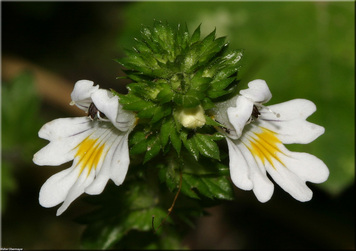
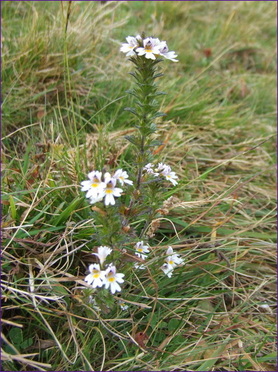
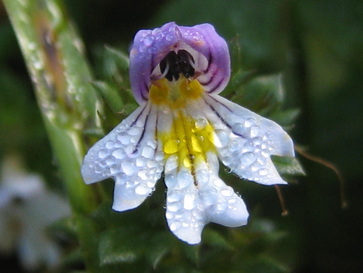
 vidac ili ocanica jednogodišnja je biljka, visine 10 do 15 cm. U gornjem je delu razgranjena i pokrivena mekanim dlacicama. Biljka je polunametnik jer se svojim usisnim korenjem pricvrsti za livadne trave i siše im sokove. Listovi su nasuprotni, jajastog oblika i na vrhu oštro nazubljeni. Cvetovi se pojavljuju u pazušcima gornjih listova, a boja irn je bela ili bledoljubicasta. Po cevastim cvetovima nalaze se male žute mrlje .


Stanište:
 
raste na suvim livadama, šumskim cistinama i neplodnim zemljištima. 
Lekoviti deo biljke: za lek sakuplja se citava biljka, bez korena ..
Lekovito delovanje: osnovno delovanje biljke koristi se u lecenju ociju. Upotrebljava se kod upale ocne spojnice, slabosti ociju zbog premorenosti od citanja ili pisanja, upale rubova kapaka, upale šarenice, glaukoma, cira na rožnici, upale suzne vre?ice i sl. Vidac se preporucuje i kod bolesti dišnih organa, kao što su kijavica, gripa, bronhitis, probavne smetnje, te želucanih i crevnih bolova .

izvor: herbateka.eu

Vidac (Euphrasia officinalis)

Porodica: Zijevalice (Scrophulariaceae)
Hrvatski naziv: Očanica, vidac
Podrijetlo: Velika Britanija
Upotreba: Ljekovito bilje
Dijelovi za upotrebu: Vanjski dijelovi

Ljekovito bilje

Picture
Jednogodišnja zeljasta biljka visoka do 30 cm. Uspravna stabljika slabo je razgranata. Listovi su dugački 3 do 17 mm, zeleni poput trave, duguljastojajasti i na rubovima nazubljeni. Cvjetovi su bijeli, plavi ili crvenkastoljubičasti te stoje u više klasova u pazušcu gornjih širokih listova. Upadljiva značajka cvjetova vidca je žuta mrlja na trorežnjastoj donjoj usni.

Cvjeta od lipnja do rujna. Vidac se bere na početku cvatnje.

Farmaceutsku primjenu imaju svi nadzemni dijelovi. Farmakološki važni sastojci su iridiodi, aukubin i katalpol, lignini, flavonoidi i treslovine.

Narodni naziv očanica dolazi od djelovanja biljke. Od srednjeg vijeka se koristi za sve probleme s vidom, od umornih očiju, pa do sljepoće. Očanica je tonik za sluznice, te ne djeluje smao na oči, nego i na upalu i začepljenje sinusa, nosa i uši. Koristi se i za probleme sa sluzi gornjeg dijela dišnog sustava, uključujući i alergijski rinitis i peludnu hunjavicu.

Pomaže kod začepljenja uha kod djece izazvanog čestim infekcijama i liječenjem antibioticima.


Druge očne bolesti koje se u pučkoj medicini liječe vidcom su ječmenac, funkcionalni poremećaji vida i pojave umora oka.

Vanjska upotreba  pri kašlju, hunjavici i kožnim bolestima, a unutrašnja i  pri želučanim tegobama.

Oblici i doziranje

Picture
Čaj: 1 do 2 čajne žličice biljke preliti s 1,5 dl vrele vode i ostaviti da odstoji 5 do 10 minuta. Piti triput na dan između obroka.

Oblog kod ječmenca: 5 čajnih žličica zeleni preliti s 2,5 dl vrele vode, ostaviti da odstoji 10 min i upotrijebiti vruće za natapanje sterilnih zavoja.

Uvarak za pranja: 1 čajnu žličicu zeleni zakuhati u 1,5 dl vode i ostaviti na slaboj vatri 5 do 10 minuta. Upotrjebljavati 3 do 4 puta na dan.

Ograničenja u primjeni
Pri izradi pripravaka koji će se primjenjivati na oku morate se pridržavati besprijekornih higijenskih mjera, a to znači da se pri svakoj promjeni mora pripraviti svježi čaj.

Nuspojave
Nisu poznate.


Uzgoj

Picture

Vidac je samonikla biljka na vrištinama i tresetištima, osobito na suhim i vapnenastim tlima. Ona je poluparazitska biljka jer se djelomice hrani od korijenja obližnjih trava, pa je treba uzgajati uz travu.


Eyebright (Euphrasia officinalis)


Wikipedia
One of the biggest problems with many herb books is that they simply list a bunch of diseases that herb has been used for without telling you important information such as 1) what part is used, 2) how it is prepared and 3) how it is administered.  All of these things make a difference in how the herb works.
Eyebright is a perfect example of a plant that has fallen victim, not so much to misinformation, but rather to a lack of important data about how it is most effectively used. Most people who are familiar with herbs, will immediately connect eyebright as an eye remedy, and they would be partially correct. 
The use of eyebright for the eyes is based on a concept called the doctrine of signatures. Because Europeans saw a similarity between the colors and shape of the flower and bloodshot eyes, the plant began to be used as an eyewash for diseases of the eye.  The key here is that the plant is very effective for eye problems when used as an eyewash.
An eyewash made from eyebright has been effectively used in treating problems like blood shot eyes, pink eye, conjunctivitis and other inflammatory conditions affecting the eyes. Eyebright helps these conditions because it is an astringent, so it tones the eye tissues, reducing inflammation.  It also has a disinfectant action.  It contains a volatile oil that becomes activated by sunlight once it is applied to the eye. 
Eyebright has most often been used for this purpose as part of a formula.  For instance, the EW formula (which contains eyebright,  bayberry, goldenseal and red raspberry) was designed by John Christopher as a topical eyewash to be used for the conditions listed above.  Dr. Christopher’s original formula also contained capsicum.  He claimed that regular use would actually improve eyesight and remove cataracts, although I haven’t known very many people who have successfully used it in this manner.
This use of eyebright as a topical application for the eyes, lead people to begin to use in internally, believing it will do the same thing.  The same thing happened with EW.  My experience is that both EW and eyebright are not very effective for eye problems (especially eyesight problems and cataracts) when taken internally.
However, both have some very useful properties when taken internally, which are not directly related to the eye.  Eyebright is an upper respiratory formula, which helps coughs, sore throats, allergies, post nasal drip, sinus infections, sinusitis, earaches and the itchy, red and watery eyes associated with hay fever.  In short, eyebright and EW are eyes, ears, nose and throat remedies.  EW in particular is a great formula product for that drippy, water runny nose one gets with hay fever or the beginning of a cold, particularly if the eyes are red and puffy.  To help these conditions, take 2-4 capsules of EW three to four times per day.
From AHG herbalist David Winston I learned that the tincture of fresh eyebright would open the Eustachian tubes which often swell shut in small children causing earaches.  It’s an herbal “tubes in the ears” treatment.  Having suffered occasionally from earaches myself, I tried this out, and it really worked.  He claims the dried powder is ineffective, but I tried that once in a dose of four capsules every couple of hours and it proved to work, although it was slower acting.
To use eyebright as an eyewash, put the contents of 2-3 capsules in a cup and fill it with boiling water.  Steep for 5 minutes and strain mixture carefully through a fine cloth.  Keep refrigerated and make a fresh batch every 3-4 days.  The same directions can be applied to making EW into an eyewash.  EW is even more affective than straight eyebright.
You can put it into the eyes with a dropper or use an eyewash cup to rinse the eyes.  (It’s a good idea to warm it to room temperature first.)  I’ve also saturated a cotton ball with the tea and placed it as a compress over my closed eye.  Using EW in this manner, along with vitamin A & D allowed me to relieve a very serious eye infection in about 24-48 hours.
Selected References
Herbal Therapy and Supplements by Merrily A. Kuhn and David Winston
The Comprehensive Guide to Nature’s Sunshine Products by Tree of Light
izvor: treelite.com

EUPHRASIA OFFICINALIS, TREATS EYE DISEASES (CATARACT, GLAUCOMA)


Euphrasia officinalis (Ochanka) – Natural Herb for Eyes health, treats Eye diseases (Cataract, Glaucoma). It is an old and reliable preventive measure, preventing the progress of cataracts. In folk medicine Ochanka used mainly in the treatment of the eye (blepharitis, conjunctivitis, barley), as an external agent. Applied externally and internally for diseases of the eye – an inflammation of the eye, inflammation of the eyelids, lacrimal sacs, with spots on the cornea. Long-term use of Ochanka both internally and externally significantly improve vision and promotes the resorption of cataracts.
Product Description

Euphrasia officinalis - unique herb that helps to keep your eyes healthy. It is called the “eye herb”. Infusion of  Euphrasia officinalis eye was washed several times a day, making lotions for konyuktevite, lacrimation, vision weakness, corneal opacity. It is an old and reliable preventive measure, preventing the progress of cataracts. In folk medicine Ochanka used mainly in the treatment of the eye (blepharitis, conjunctivitis, barley), as an external agent. Applied externally and internally for diseases of the eye – an inflammation of the eye, inflammation of the eyelids, lacrimal sacs, with spots on the cornea. Long-term use of Ochanka both internally and externally significantly improve vision and promotes the resorption of cataracts. Every month must take breaks for 2 weeks .

    Recipes

-Infusion of  Ochanka eyes washed with konyuktevite, barley, glaucoma. To prepare three teaspoons of herbs pour 2 cups of boiled water for 20-30 minutes, strain, wring out and bring the volume of boiling water to the source. Take 0.5 cups three times a day before meals. For lotions – 4 tablespoons to 0.5 liters of water.
-1 teaspoon (1.5 g) herbal tea pour 1 cup (200 ml) boiling water for 15-20 minutes, drain, take an adult to 1/3 cup 3 times a day with meals. Duration – 1 month.
Ingredients (tablets):
tablet of 200 mg contains Euphrasia herb – 150 mg.
As an auxiliary component included microcrystalline cellulose.
Recommended dosage: adults 2-3 tablets 2 times a day with meals, drinking plenty of water. Duration – 1 month.Before use, consult a doctor!
 Contraindications:
Pregnancy. Lactation. Hypersensitivity.

izvor:luckychest.com


Eyebright (Euphrasia officinalis)


Also listed as: Euphrasia officinalis


Related Terms

  • Adhib, ambrosia, augentrost, Augentrostkraut (German), Augstenzieger, briselunettes (French), casse-lunette (French), clary, clary wort, clear eye, eufragia, eufrasia (Italian), Euphraise, Euphraisiaeherba, Euphraisiae herbal (eyebright herb), EuphrasiaEuphrasia mollisEuphrasia officinalis, Euphrasia rostkovianaEuphrasia sibirica, euphrasy, ewfras, frasia, herbed euphraise, herbe d'euphraise officinale, hirnkraut, laegeojentrost (Danish), luminella, meadow eyebright, muscatel sage, red eyebright, sage, salvia sclarea, schabab, Scrophulariaceae (family), see bright, Weisses Ruhrkraut, Wiesenaugetrost, Zwang-kraut.


Background

  • Eyebright's genus name, Euphrasia, is derived from the Greek "euphrosyne," the name of one of the three Graces who was distinguished for joy and mirth. Eyebright was used as early as the time of Theophrastus (Greek philosopher and biologist, student of Plato and Aristotle) and Dioscorides (Greek philosopher (circa AD 64) who authored a pharmacological account of plants), who prescribed infusions for topical applications in the treatment of eye infections. During the middle ages, eyebright was widely prescribed by medical practitioners as an eye medication, as a cure for "all evils of the eye."
  • In Europe, the herb eyebright (Euphrasia officinalis) has been used for centuries as a rinse, compress, or bath against eye infections and other eye-related irritations (a use reflected in many of its vernacular names). When taken by mouth, eyebright has been used to treat inflammation of nasal mucous membranes and sinusitis.
  • Eyebright is high in iridoid glycosides such as aucubin. In several laboratory studies, this constituent has been found to possess hepatoprotective (liver protecting) and antimicrobial activity. There is limited clinical research assessing the efficacy of eyebright in the treatment of conjunctivitis (pink eye), and the use of eyebright for other indications has not been studied in clinical trials.
  • Little data exists regarding the safety and toxicity of eyebright. A concern regarding the opthamalogic (eye) use of eyebright is the potential for contamination. The U.S. Food and Drug Administration (FDA) has not evaluated eyebright for a generally recognized safe (GRAS) status.


Evidence Table

These uses have been tested in humans or animals. Safety and effectiveness have not always been proven. Some of these conditions are potentially serious, and should be evaluated by a qualified healthcare provider.


Several iridoid glycosides isolated from eyebright, particularly aucubin, possess anti-inflammatory properties comparable to those of indomethacin (a nonsteroidal anti-inflammatory drug). Although early evidence is promising, there is currently insufficient evidence to recommend for or against eyebright as an anti-inflammatory agent.


Eyebright has been used in ophthalmic (eye) solutions for centuries, in the management of multiple eye conditions. Currently, there is insufficient scientific evidence to recommend for or against the use of eyebright in the treatment of conjunctivitis.


Aucubin, a constituent of eyebright, may aid in liver protection. However, there is currently insufficient evidence to recommend for or against the use of eyebright as a hepatoprotective agent.


Tradition / Theory

The below uses are based on tradition, scientific theories, or limited research. They often have not been thoroughly tested in humans, and safety and effectiveness have not always been proven. Some of these conditions are potentially serious, and should be evaluated by a qualified healthcare provider. There may be other proposed uses that are not listed below. 

  • Allergies, antibacterial, antihelmintic (expels worms), antiviral, appetite stimulant, asthma, astringent, blepharitis (inflammation of the eyelid), bronchitis (chronic), cancer, cataracts, catarrah (inflammation of the mucous membranes) of the eyes, common cold, congestion, cough, digestive aid, earaches, epilepsy, expectorant, flavoring agent, gastric acid secretion stimulation, hay fever, headache, hoarseness, jaundice, liver disease, measles, memory loss, middle ear problems, ocular (eye) compress, ocular (eye) fatigue, ocular inflammation (acute, subacute, blood vessels of eye, eyelids), ocular (eye) rinse, ophthalmia (eye infection), respiratory infections, rhinitis (inflammation of nasal mucosa), sinusitis, skin conditions, sneezing (chronic), sore throat, sties, visual disturbances.


Dosing

Adults (over 18 years old)

  • There is no proven safe or effective dose of eyebright. Traditionally, 2-4 grams of dried herb three times daily has been suggested for multiple indications. For conjunctivitis (pinkeye), one drop of eyebright 1-5 times daily for 3-17 days has been studied.
Children (under 18 years old)
  • There is no proven safe or effective dose of eyebright in children. However, children have tolerated 4-5 homeopathic pills of Euphrasia 30C daily for three days for prevention of viral conjunctivitis.

Safety

The U.S. Food and Drug Administration does not strictly regulate herbs and supplements. There is no guarantee of strength, purity or safety of products, and effects may vary. You should always read product labels. If you have a medical condition, or are taking other drugs, herbs, or supplements, you should speak with a qualified healthcare provider before starting a new therapy. Consult a healthcare provider immediately if you experience side effects. 

Allergies

  • Avoid in individuals with a known allergy or hypersensitivity to eyebright. Hypersensitivity to members of the Scrophulariaceae family may lead to a cross-sensitivity reaction.
Side Effects and Warnings
  • Systematic study of clinical safety and tolerability has been limited. Both children and adults have tolerated short-term ophthalmologic use of eyebright for conjunctivitis (pinkeye). However, the potential exists for contamination of ophthalmologic preparations of eyebright, and eyebright tincture has been associated with pruritus (severe itching), redness and swelling of the eye, vision changes, and photophobia (intolerance or fear of light). Other adverse effects reported include toothache, confusion, headache, sneezing, yawning, insomnia, raised ocular pressure, lacrimation (tears), cough, dyspnea (difficulty breathing), nasal congestion, hoarseness, nausea, constipation, expectoration, polyuria (excessive urination) and diaphoresis (excessive sweating).
  • Eyebright is possibly safe when used in amounts commonly found in foods, or when eyebright is used as a flavoring agent.
  • Eyebright is likely unsafe when "home-made" preparations are used for ophthalmic indications, due to the likelihood of microbial contamination; when used in greater than studied doses or duration due to lack of safety data; and when used during pregnancy and breastfeeding, or in pediatric patients.
  • Although not well-studied in humans, eyebright may lower blood sugar levels. Caution is advised in patients with diabetes or hypoglycemia, and in those taking drugs, herbs, or supplements that affect blood sugar. Serum glucose levels may need to be monitored by a qualified healthcare professional, including a pharmacist, and medication adjustments may be necessary.
Pregnancy and Breastfeeding
  • Eyebright is not recommended in pregnant or breastfeeding women due to a lack of available scientific evidence.
Interactions
Interactions with Drugs

  • Eyebright may interfere with the way the body processes certain drugs using the liver's "cytochrome P450" enzyme system. As a result, the levels of these drugs may be altered in the blood, and may cause increased effects or potentially serious adverse reactions. Patients using any medications should check the package insert, and speak with a qualified healthcare professional, including a pharmacist, about possible interactions.
  • Eyebright may lower blood sugar levels. Caution is advised when using medications that may also lower blood sugar. Patients taking drugs for diabetes by mouth or insulin should be monitored closely by a qualified healthcare professional, including a pharmacist. Medication adjustments may be necessary.
Interactions with Herbs and Dietary Supplements
  • Eyebright may interfere with the way the body processes certain herbs or supplements using the liver's "cytochrome P450" enzyme system. As a result, the levels of other herbs or supplements may become too high in the blood. It may also alter the effects that other herbs or supplements possibly have on the P450 system.
  • Theoretically, eyebright may lower blood sugar levels. Caution is advised when using herbs or supplements that may also lower blood sugar. Blood glucose levels may require monitoring, and doses may need adjustment.